What Is Long-Distance Caregiving and What Does It Involve?
Long-distance caregiving means helping a parent or other loved one who lives too far away for you to reach quickly. You cannot stop by with meals or sit in on medical appointments, so you handle the responsibilities from afar: tracking medications, speaking with providers, paying bills and preparing for emergencies.
Most families caring for loved ones from afar do not do this alone. Distance caregivers usually split the work with siblings, other family members and family friends. One person acts as the primary caregiver and makes the final calls, while the others take defined tasks such as insurance calls or research. Sharing the work this way keeps the responsibilities from landing on one person.
How to Help Elderly Parents From a Distance
Here is how to help elderly parents from a distance, in seven steps most families can start this week:
- Keep up regular communication. Pick a weekly call time and add video, so you can see how your parent looks and moves, not only how they sound.
- Build one shared file. Keep medications, providers, contacts and insurance details in a single document every sibling can open.
- Share the calendars. Put medical appointments on shared calendars, and ask your parent to sign a HIPAA release (a privacy form) so providers can speak with you.
- Arrange practical help. Set schedules for groceries, meals, rides and housekeeping, so basic tasks do not depend on your parent's energy that day.
- Recruit local eyes. Give neighbors and family friends your number and one specific ask, such as telling you if the mail piles up.
- Settle the legal and financial papers. Wills, trusts, a healthcare power of attorney and a plan for finances are easier to set up before a crisis; an elder law attorney can advise.
- Protect your own energy. Plan respite (a planned break from caregiving) and lean on emotional support, because distance caregiving is a long stretch.
What Are the Risks of Living Far Away From Elderly Parents?
The main risk of living far away from elderly parents is delay. A fall, a missed dose or a week of poor eating can go unnoticed until it becomes an emergency. New bruises, weight loss or confusion reach you late, if at all. In the Phoenix area, summer heat adds another concern; the CDC notes that adults 65 and older are more prone to heat-related illness.
The strain also reaches you. Distance caregivers often carry guilt, travel costs and the pressure of coordination, and those pressures can feed burnout (exhaustion from ongoing caregiving stress). Support networks, respite, shared responsibilities and professionals lower that load.
What Care Plan Should Out-of-State Families Set Up for a Parent in Scottsdale?
A workable plan has four parts: a written handbook, local eyes, a clinical coordinator and a clear plan for emergencies. The coordinator is where most families get stuck. Many call a home care or nursing agency first, but home care and nursing agencies often rotate caregivers and nurses from a call-center roster, so the person at your parent's door keeps changing. Standard home health also caps how much time each nurse can spend with each patient.
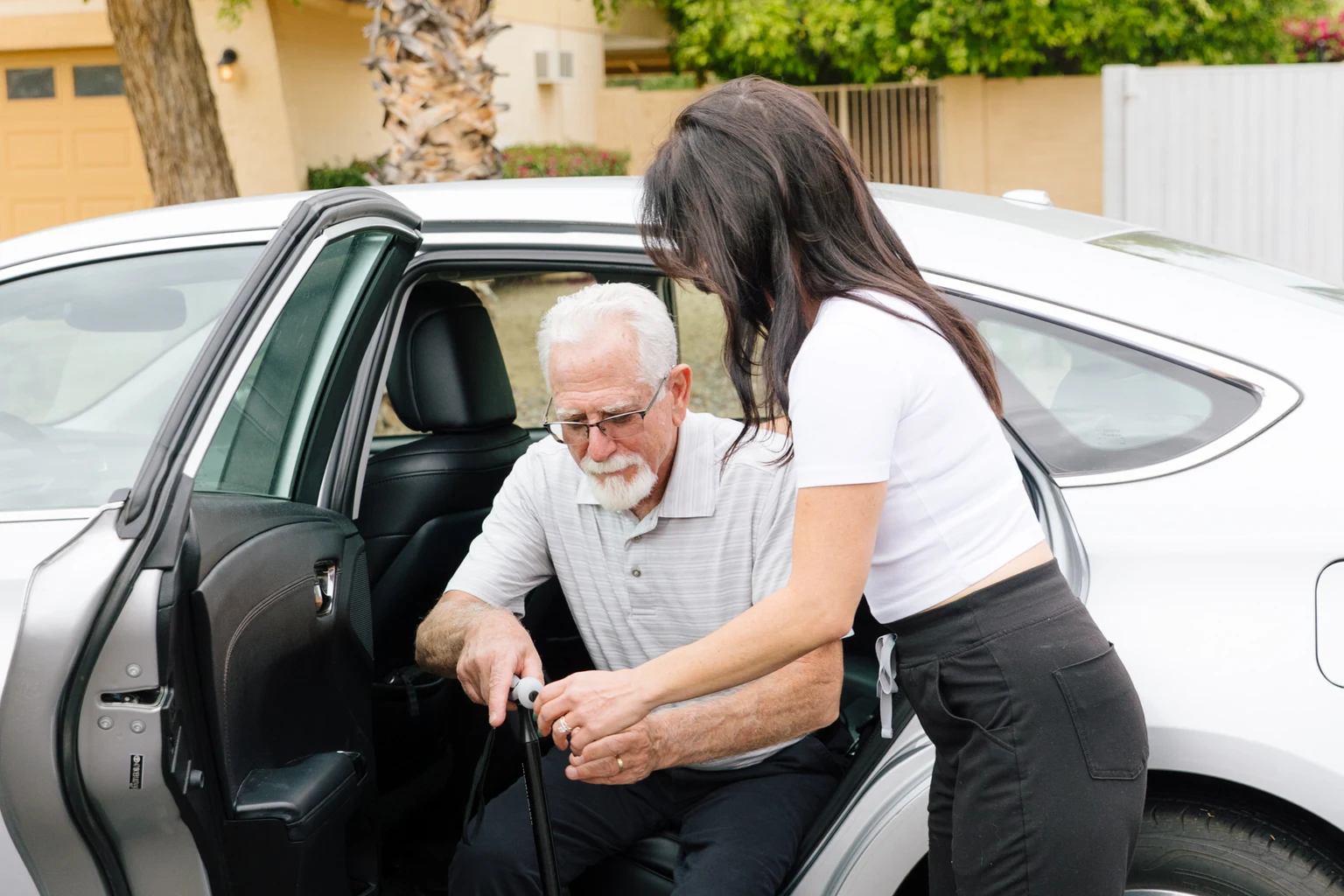
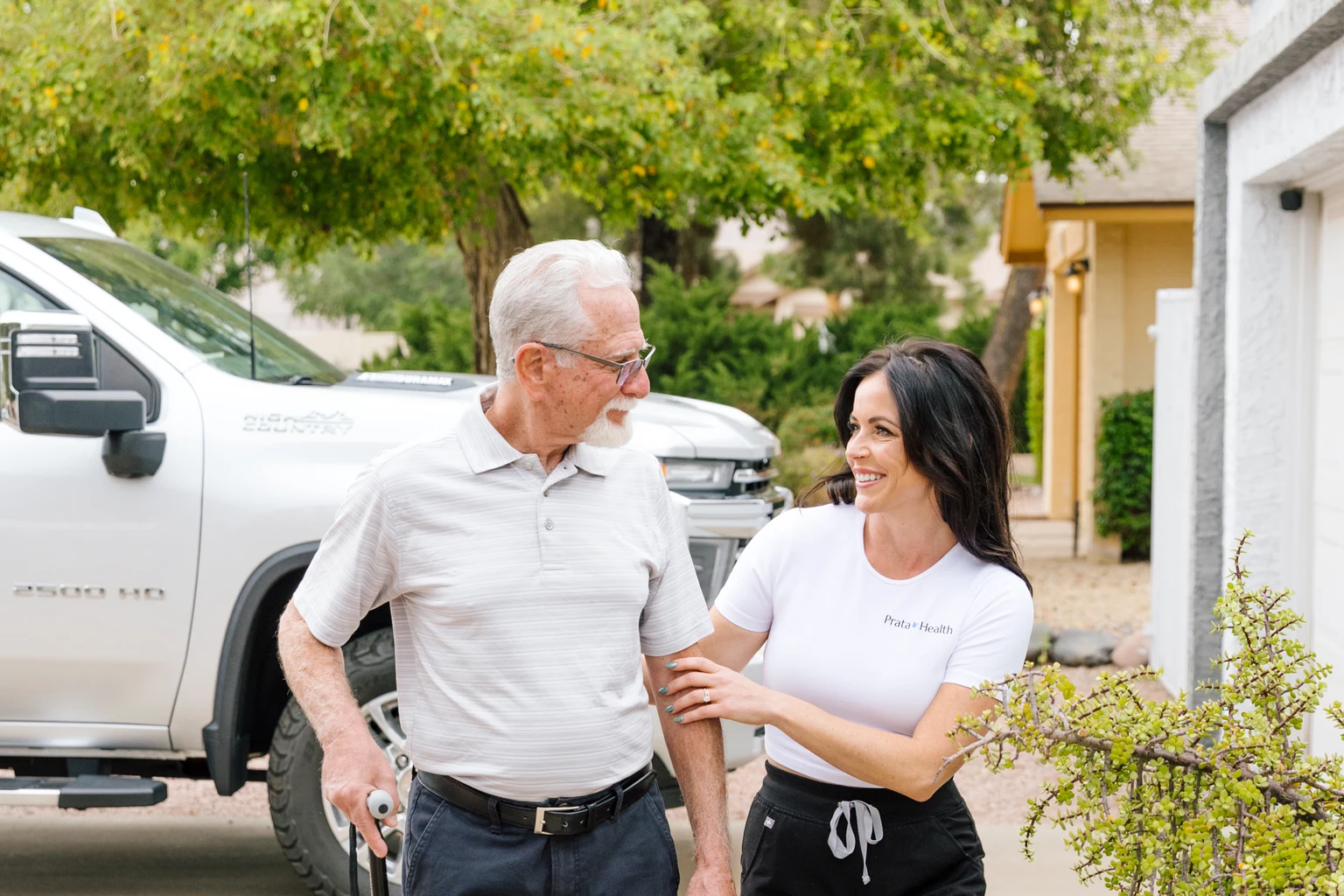
Prata Health integrates health navigation, skilled nursing and caregiving under one Registered Nurse. That RN leads your parent's care, becomes part of the family and helps coordinate care among physicians, pharmacies and caregivers, so you are not the only link between them. If you want an RN on the Scottsdale end of your plan, you can read how concierge nursing in Scottsdale works.
What Belongs in a Handbook for Long-Distance Caregivers?
A handbook for long-distance caregivers is a shared folder, digital and paper, that anyone stepping in can use without calling you first. The National Institute on Aging encourages families to gather this information early. Include:
- Medications: name, purpose, prescriber and pharmacy for each.
- Providers and contacts: primary physician, specialists, pharmacy and insurance numbers.
- Emergency contacts: the neighbor with a key, nearby family friends and the order to call them in emergencies.
- Legal papers: wills, trusts, advance directive and where the originals are kept.
- Daily routine: meals, schedules, mobility needs and what a normal day looks like.
- Escalation steps: who calls 911, who calls you and who meets the ambulance.
Who Can Check on My Parent in Scottsdale When I Live Out of State?
Start with neighbors, friends from clubs or church, and relatives nearby. They can notice changes and call you, but personal care and medical judgment are too much to ask of a volunteer. A professional fills that gap. A Registered Nurse can visit, review medications, catch changes a friend might miss and coordinate with your parent's physician. Ask each person for one small task, agree on regular communication, and write their name into the handbook.
How Often Should I Visit My Parent When I'm a Long-Distance Caregiver?
It depends on your parent's health, how stable it is and what help is already in place. Many long-distance caregivers plan a visit every few months and add a trip after a hospital stay, a fall or a medication change. Treat each visit as a review: open the refrigerator, sort the mail, check pill organizers and bills, and walk the house for trip hazards.
Should I Hire a Geriatric Care Manager or Move Closer to My Parent?
A geriatric care manager, also called an Aging Life Care professional, is usually a nurse or social worker who assesses needs and arranges services. Hiring one is less disruptive than relocating, so it is a sensible first step. Moving closer suits some families, but it affects your job, finances and household, which is why many try professional coordination first and revisit the question later. Prata Health's RN-led model adds skilled nursing and caregiving to that coordination under one nurse.
How Do I Know When a Parent Who Lives Alone Needs Care at Home?
Look for patterns, not single bad days: missed medications, weight loss, spoiled food, unopened mail, unexplained bruises or an unsafe drive. These signs may point to a medical or safety problem, so ask your parent's physician for an evaluation rather than guessing. If care at home fits, the level matters. Round-the-clock coverage across a full week takes five to six caregivers rotating through day, evening and night shifts, while a live-in arrangement uses one primary caregiver plus a relief caregiver for days off. After a fall, the RN partners with the physical therapist to adjust a mobility plan.
How the Plan Changes With Cognitive Decline and the End of Life
Two situations call for their own plan, because the stakes and the timing change.
My Mom Is Showing Signs of Cognitive Decline and I Live Far Away, What Should I Do?
Start with a medical evaluation; her physician decides what her stage of cognitive decline means for daily life. Then focus on safety and consistency. Ask about the stove, wandering, driving, scams and medications, and put the answers in the handbook. Finish legal papers early, ideally while she can still take part. Cognitive decline makes routine and familiar faces matter more, so a small, steady team usually works better than a rotating one. At Prata Health, a certified nursing assistant (called an Activity Assistant) delivers daily hands-on support while the registered nurse oversees the plan, and the Alzheimer's Association also publishes long-distance caregiving resources.
What Should You Do When Your Parent Is Dying and You Live Far Away?
Ask the physician plainly what to expect and whether a hospice evaluation is appropriate. Hospice is comfort-focused care for people in the final stage of a serious illness. Timing is hard to predict, so many families travel sooner than feels necessary and agree in advance who will be at the bedside. Prata Health's End of Life Care keeps an RN involved in your parent's comfort when you cannot be in the room. Grief is common here, so lean on clergy, a counselor or the hospice social worker for emotional support.
Put a Registered Nurse on Your Parent's Team
If your parent lives in Scottsdale and you are caring from afar, an RN-led plan can be in place before the next emergency. To talk through your family's situation, Request a Consultation with Prata Health.