At Prata Health, concierge nursing is built on a premise that is deceptively simple: when a skilled nurse knows you well, outcomes improve. The structure of a given week varies by client, by recovery stage, and by what each person needs most. What follows is a representative week drawn from the rhythms of Prata Health's concierge nursing practice.
What Makes a Concierge Nurse's Schedule Different from Standard Care
Unlike nurses in hospital or clinic settings who rotate through dozens of patients per shift, a concierge nurse carries a deliberately small caseload. That intentional structure is not a luxury detail. It is the mechanism that makes everything that follows possible. Each client receives extended, unrushed visits, direct and consistent access to their registered nurse, and a level of care that evolves alongside their health.
Continuity of care is not a marketing phrase in this model. It is a clinical variable. The Agency for Healthcare Research and Quality (AHRQ) has consistently documented that gaps in post-discharge follow-up, particularly the absence of a consistent clinician tracking a patient between acute episodes, are a primary driver of avoidable rehospitalizations in older adults. When a nurse has assessed the same person twenty times over several months, subtle changes register immediately. That is the mechanism concierge nursing activates.
Early Week: Clinical Assessments and Wound Care
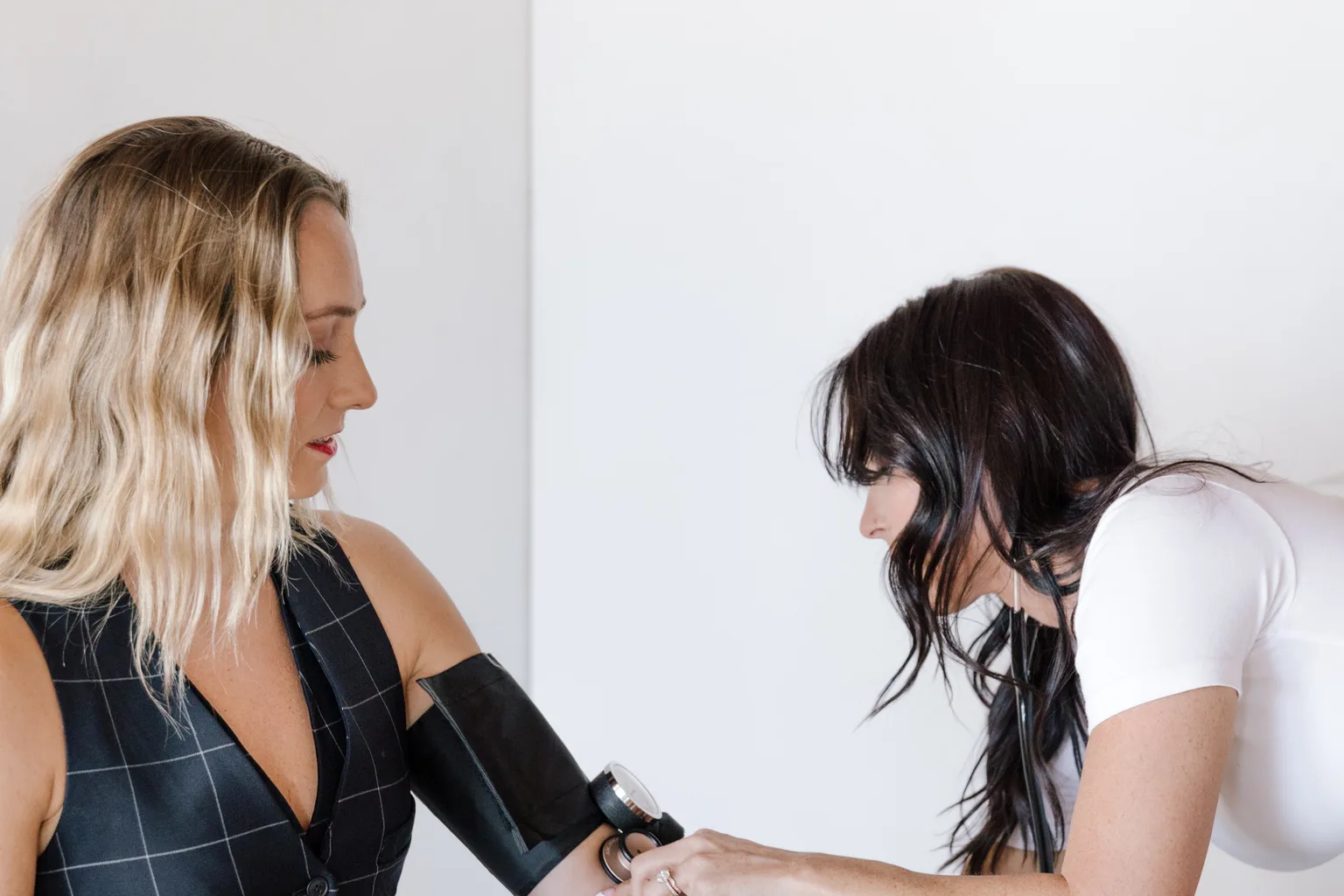
The first part of the week centers on in-home clinical visits. These appointments are substantive: vital signs, a targeted systems review, a full medication inspection, and a physical evaluation shaped by each client's diagnosis, surgical history, or chronic condition profile.
For clients receiving post-surgery recovery nursing, early-week visits focus on incision inspection, drain management, and swelling assessment. Wound care is one of the most clinically consequential skills in home care nursing. A concierge nurse trained in wound assessment identifies early signs of infection, tracks the trajectory of healing, and communicates findings directly to the treating surgeon, often preventing an unnecessary emergency visit.
Home care at this level is proactive, not reactive. The nurse is already present, watching, assessing, and adjusting the plan in real time. That proximity is what separates concierge nursing from a post-discharge phone call or a two-week follow-up appointment.
Midweek: Medication Management, Education, and Physician Coordination
Medication management is among the most consequential clinical tasks a concierge nurse performs during a typical week. A midweek visit often begins with a full medication reconciliation: reviewing every drug the client takes, confirming correct dosing, checking for interactions, and assessing adherence patterns.
Polypharmacy, the concurrent use of five or more medications, is associated with elevated risk of adverse drug events, particularly among older adults. The Centers for Disease Control and Prevention (CDC) identifies polypharmacy as a significant driver of falls, adverse drug reactions, and avoidable hospitalizations in adults over 65, many of whom are receiving prescriptions from multiple specialists who have never directly communicated. A registered nurse who reviews the full medication picture at home, in context, is positioned to catch problems before they escalate.
Families who attend these sessions learn what each medication does, what side effects to watch for, and how to recognize a symptom that warrants a call. That education is personalized to the client's literacy level, health history, and family context, and it is one of the most durable benefits a concierge nursing relationship provides.
Midweek is also the coordination window. The nurse communicates directly with physicians, specialists, and other members of the care team. She translates clinical findings into language the family can act on and brings the family's observations back to the clinical team in precise medical terms. This role as a bridge between the medical and personal worlds is one that most families have never experienced in a traditional healthcare setting.
What a Concierge Nurse Watches For That Others Miss
These are the early-warning signs tracked week over week. None of them would trigger a call from a home health aide. Each one can be the first signal of something that needs clinical attention.
Subtle weight changes
two or more pounds overnight, a red flag for fluid retention in cardiac conditions
New confusion or word-finding difficulty
cognitive changes that were not present the previous week
Appetite decline
meals skipped or food intake dropping across multiple consecutive days
Gait shifts
slower pace, wider stance, or reluctance to walk without holding onto furniture
Medication errors caught at home
wrong pill, wrong dose, or missed refills before they cause harm
Skin changes
early pressure injury signals over bony prominences in lower-mobility clients
Sleep disruption
pattern changes that may indicate pain, anxiety, or an undiagnosed urinary infection
Later in the Week: Family Meetings and Personalized Care Planning
Families are active participants in a concierge nursing relationship, not bystanders. Later in the week, a Prata Health nurse often sets aside structured time for family conversations, either in person during a visit or by phone, to review what is working, what has shifted, and what the care plan needs next.
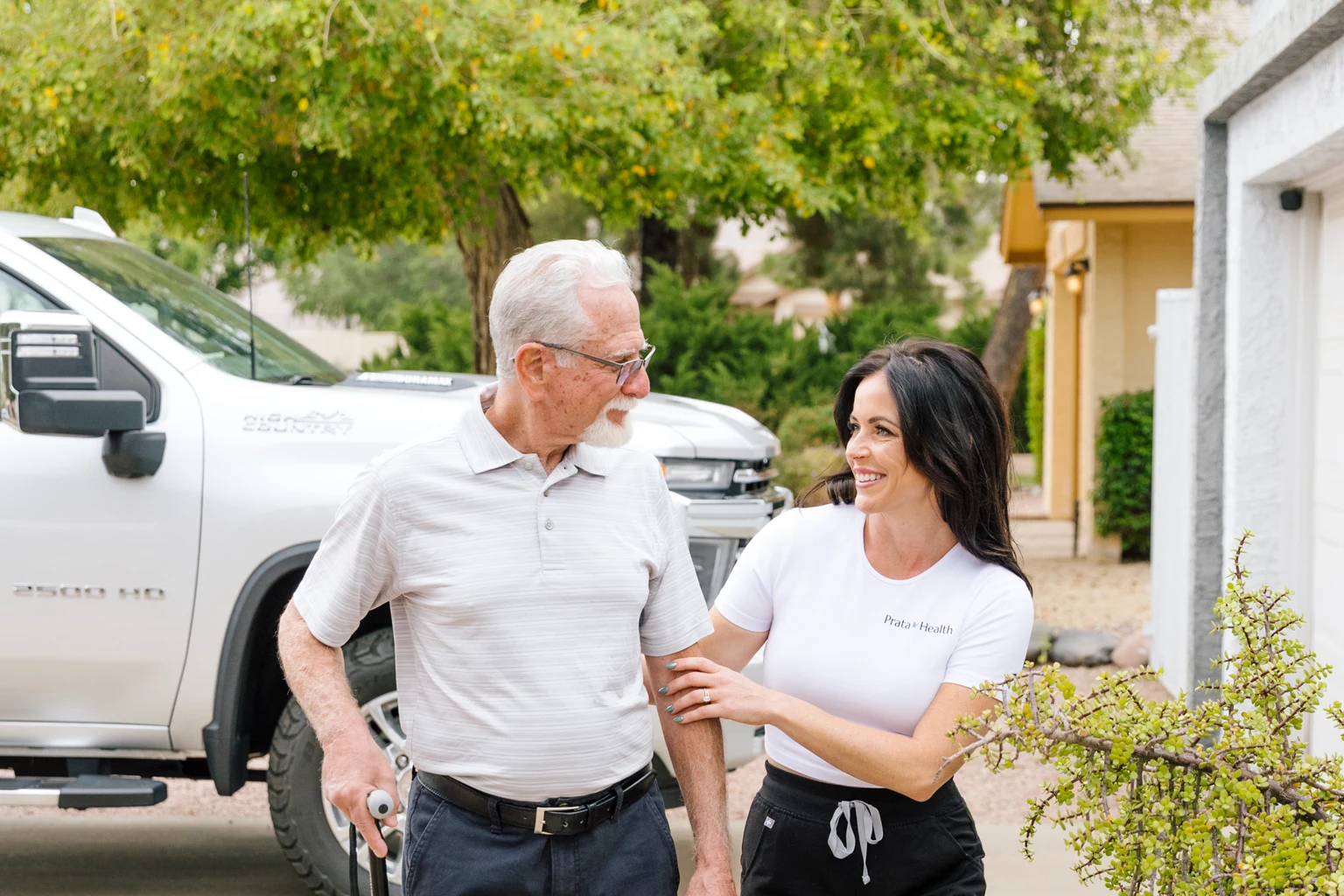
For clients aging in place, these conversations go deeper: fall risk reduction, cognitive check-ins, home safety assessments, and discussions about long-term planning. These are often the conversations families say they needed but could never find a space to have in a rushed clinical appointment or a brief home health visit.
Personalized care means the care plan is never finished. It is a living document, reviewed and revised at every meaningful interval, shaped by what the client experiences between visits and not only by what the nurse observes during them. Concierge nurses in this model are trained to notice what has changed before the client has fully put it into words.
End-of-week time is dedicated to thorough documentation. Every visit note, assessment finding, and physician communication is recorded accurately before the week closes. That record supports continuity of care when the client sees their specialist, faces a new diagnosis, or, in rare cases, requires hospitalization.
Home care does not stop at the end of a business day. Prata Health's clients have access to their concierge nurse beyond standard business hours. That availability is not incidental. It is a structural feature of the model and one of the things families consistently name as most meaningful.
Who Benefits Most from Concierge Nursing Services
Families typically reach out to Prata Health when at least one of these situations sounds familiar:
Your parent has had one or more unplanned hospitalizations in the past year and you want someone watching for early signs before it happens again.
You live more than thirty minutes away and cannot be there week to week to catch what is changing.
Your parent is managing multiple chronic conditions across multiple specialists and no one is coordinating the whole picture.
A recent surgery or procedure left your parent with discharge instructions and a follow-up appointment but no one to bridge the gap in between.
You are watching a slow decline in energy, cognition, or mobility and you want a clinical assessment, not a guess.
Your family has disagreements about what level of care is appropriate, and you need an objective clinical voice to help everyone get on the same page.
The Full Picture: What a Concierge Nurse Actually Does in a Week
The week described above is a frame, not a formula. What a concierge nurse actually does in a week is shaped entirely by the client in front of her. Some weeks center on wound care and surgical follow-up. Others involve helping a family process a new diagnosis. Others still focus on stabilizing a care routine for an older adult, or preparing for a hospital discharge arriving in a matter of days.
At Prata Health, nursing services are delivered by credentialed professionals who bring clinical rigor and genuine human presence in equal measure. The skilled nursing care Prata Health provides is grounded in both clinical expertise and personal knowledge of each client, built over time. The concierge model does not ask "how do we process this patient" but "how do we support this person." That reframing changes everything about how a week unfolds and what outcomes look like.
Concierge nurses who work within this model often say a version of the same thing: this is the nursing they were trained to practice, and the caseload is finally small enough to do it right.