By Bianca Fabbo, MSN-ed, RN, AMB-BC
Why the First Six Weeks After Heart Surgery Require Active Oversight
The period immediately after you leave the hospital is the highest-risk window in any surgery recovery. Patients who have undergone open heart surgery, bypass procedures, or valve repair are rebuilding while still vulnerable to serious complications. Heart rate irregularities, fluid retention, infection at the incision site, and pain management challenges can all escalate quickly if left unmonitored.
The American College of Cardiology and the Society of Thoracic Surgeons consistently emphasize in their jointly issued clinical guidance that structured post-surgical care protocols are essential to reducing complications and readmissions for cardiac surgery patients. The core finding across this body of evidence is the same: most complications that send patients back to the hospital in the first few weeks are detectable early, often days before they become emergencies.
Early detection requires a trained eye present in the home.
A Daily Vital Signs Protocol for Home Care After Cardiac Surgery
The foundation of any sound surgery recovery plan is consistent, systematic monitoring. Here is what a skilled home care nurse assesses on every visit during the cardiac recovery phase.
Daily Monitoring: What the RN Assesses at Every Visit
These are the clinical checkpoints a Prata Health nurse tracks at each home visit. Taken together, they form a running picture of how your recovery is progressing.
Cardiovascular status
resting heart rate and rhythm, blood pressure sitting and standing, oxygen saturation via pulse oximetry (target above 95 percent for most cardiac patients)
Daily weight
gain of more than two pounds in 24 hours or five pounds in one week signals fluid accumulation and warrants an immediate call to the care provider
Incision inspection
every sternotomy or thoracotomy site assessed for redness, warmth, separation, or drainage; leg harvest sites from bypass procedures receive equal clinical scrutiny
Pain and respiratory assessment
pain scores documented, analgesic adequacy evaluated, incentive spirometry and splinted coughing coached to protect pulmonary function
Cognitive and emotional screening
brief daily assessments to identify confusion, mood shifts, or early signs of depression, each of which can slow physical recovery if left unaddressed
Medication review
adherence to antiplatelet agents, beta-blockers, statins, and other post-cardiac surgical regimens confirmed and reconciled against what the pharmacy dispensed
Incision Care After Cardiac Surgery
Incision care is one of the most critical tasks in the early weeks after surgery. Wound edges should be approximating cleanly without tension. Any sign of dehiscence or purulent discharge triggers same-day communication with the surgical team. Leg harvest sites from bypass procedures receive the same clinical scrutiny, as they carry their own distinct infection and healing timelines that differ from the sternal wound.
Uncontrolled pain limits deep breathing, raises blood pressure, and increases the risk of atelectasis. When Prata nurses help manage pain medication, they evaluate the adequacy of prescribed analgesics and ensure the right medications are reaching the patient at the right times, then coach patients through incentive spirometry and splinted coughing to protect pulmonary function. Every aspect of the physical recovery is connected, and the nurse's role is to hold those connections visible.
Week-by-Week Recovery Milestones for the First Six Weeks
Timelines vary by procedure, age, and overall health, but the framework below reflects standard home health guidance for open cardiac surgery patients.
Weeks 1 and 2 Through Week 6: A Phased Progression
Each phase of the six-week window carries its own clinical focus. A licensed RN tracks progress against these milestones and adjusts the care plan as the patient advances.
Weeks 1 and 2 (critical transition)
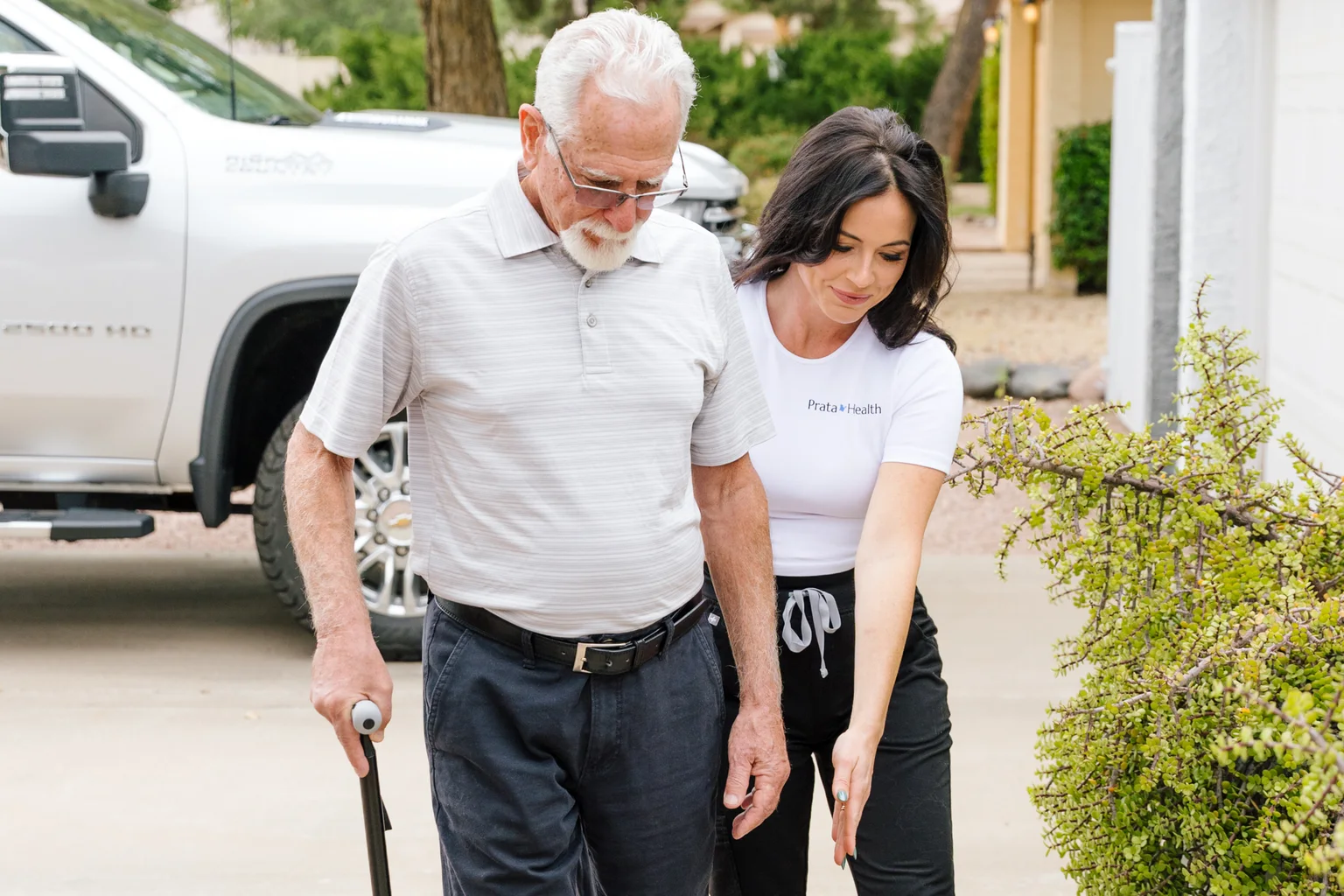
Establish a daily monitoring routine, achieve wound stability without early infection, begin short supervised walks of five to ten minutes two to three times daily, and confirm medication adherence across all post-cardiac surgical agents. Skilled nursing care during this phase is the standard of care that keeps patients out of the emergency department.
Weeks 3 and 4 (building baseline endurance): Most patients without major complications can tolerate longer walks, light household activity, and reduced narcotic analgesia. Monitoring shifts toward ensuring activity increases are matched by appropriate cardiovascular response, and that no new complications emerge as exertion gradually builds. Well-approximated sternal wounds are generally fully sealed by week three, though leg harvest sites may still require dressing changes.
Weeks 5 and 6 (preparing for cardiac rehabilitation): The final stretch before the six-week surgical clearance visit marks the transition from surgery recovery to formal cardiac rehabilitation. A skilled home care nurse bridges this gap by educating patients on what cardiac rehabilitation involves, helping coordinate the referral, and ensuring each patient arrives at the first session physically stable and medically prepared. The American Heart Association notes that participation in cardiac rehabilitation reduces cardiovascular mortality and improves long-term survival for eligible patients, yet enrollment rates remain low, often because patients do not receive a clear referral pathway at discharge.
Warning Signs That Require Immediate Attention
Contact the care provider or activate emergency services for any of the following signs. The difference between normal post-surgical discomfort and an emerging complication is precisely where RN-led home care delivers its greatest value.
Chest pain differing from expected sternal soreness: pressure, radiation to the arm or jaw, or associated sweating requires immediate evaluation
Fever above 101 degrees Fahrenheit
a reliable early signal of surgical site infection or other post-operative complication
Incision red flags
new drainage, wound separation, or a clicking sensation at the sternum not present before discharge
Heart rate above 120 beats per minute at rest: or a newly irregular rhythm, both warrant same-day clinical review
Sudden shortness of breath
especially when lying flat, a cardinal sign of fluid accumulation that must not wait
Severe swelling in one leg
a known risk for deep vein thrombosis after cardiac surgery and not to be attributed to normal post-operative swelling
Abrupt confusion or a notable change in mental status: post-cardiac surgery cognitive changes are common and clinically significant when sudden or severe
Recovering at Home After Cardiac Surgery in Paradise Valley: The Prata Health Approach
Concierge nursing in Paradise Valley through Prata Health delivers a model of care built around the individual patient rather than a volume-driven visit schedule. Each care plan is authored by a registered nurse with ambulatory care certification and carried out through consistent, unhurried home visits.
For patients recovering at home after cardiac surgery in Paradise Valley, this means a personalized daily monitoring checklist calibrated to the specific procedure performed (whether bypass, valve repair, TAVR, or another cardiac intervention), direct communication between the Prata Health nurse and the patient's cardiac surgeon or cardiologist, coordination of cardiac rehabilitation enrollment before the six-week clearance visit, and family education so every person in the household understands the plan and knows what to watch for between nursing visits.
A devoted family caregiver can provide love, encouragement, and presence. What a licensed RN with cardiac experience brings is the clinical pattern recognition to distinguish normal post-surgical discomfort from an emerging complication, often before the patient would describe it as alarming. This is not a check-the-box model of home healthcare. It is clinical stewardship of your recovery from start to finish.