Why the First 30 Days After Surgery Decide Everything
Surgeons control the operating room. What happens after discharge is usually out of their hands, handed off to whichever home care agency or skilled nursing provider has an opening that week. That handoff matters more than most referral sources admit. The Centers for Medicare & Medicaid Services built the Hospital Readmissions Reduction Program specifically because so many post-surgical complications, wound infections, medication errors, missed mobility milestones, are preventable with better care coordination after discharge, not inevitable outcomes of the surgery itself.
Research on care transitions backs this up. In a randomized controlled trial published in the Archives of Internal Medicine, geriatrician Eric Coleman and colleagues found that patients who received structured support during the transition from hospital to home had significantly lower rates of rehospitalization than those who received standard discharge instructions alone. The intervention that worked was not more equipment or more visits. It was a single accountable clinician who understood the patient's full care plan and stayed engaged through the vulnerable weeks after discharge.
That is the standard this guide holds every post-op home nursing partner to.
How a Surgeon's Guide to Choosing a Post-Op Home Nursing Partner Works: 8 Key Questions
This surgeon's guide to choosing a post-op home nursing partner starts here, with the eight questions that separate an RN-led partner from a staffing roster.
Is the Care Plan Actually RN-Led, or Just RN-Reviewed?
Ask who builds the care plan and who is accountable for it day to day. Many home care companies have a Registered Nurse sign off on a plan built by an intake coordinator, then hand daily visits to rotating aides. A genuine RN-led model means one nurse, often the same nurse who met the patient in the hospital, owns the plan, adjusts it as recovery progresses, and is reachable when something changes.
How Is Wound Care Assessed, Documented, and Escalated?
Wound care is where post-surgical complications most often begin. The right partner photographs and documents the wound at every visit, tracks healing against a clinical baseline, and has a defined threshold for calling the surgical team rather than waiting for the next scheduled visit. Ask to see how they document drainage, redness, and closure, not just whether they change a dressing.
What Is the Protocol for Pain Management After Discharge?
Pain management after surgery is a moving target. A nursing partner should be actively titrating comfort measures against mobility goals, not simply confirming the patient took their prescribed dose. Ask how they balance adequate pain control with the fall and constipation risks that come with opioid use in older adults, and how they communicate dosage concerns back to the prescribing surgeon.
Who Manages Medication Management and Reconciliation?
Medication management is one of the highest-risk points in any discharge. New prescriptions often overlap with medications the patient was already taking for a heart condition, diabetes, or blood pressure, and reconciliation errors are a leading driver of readmission. A strong partner reconciles every medication against the discharge summary within the first visit and flags conflicts to the surgeon directly.
How Quickly Does the Team Escalate a Change in Vitals?
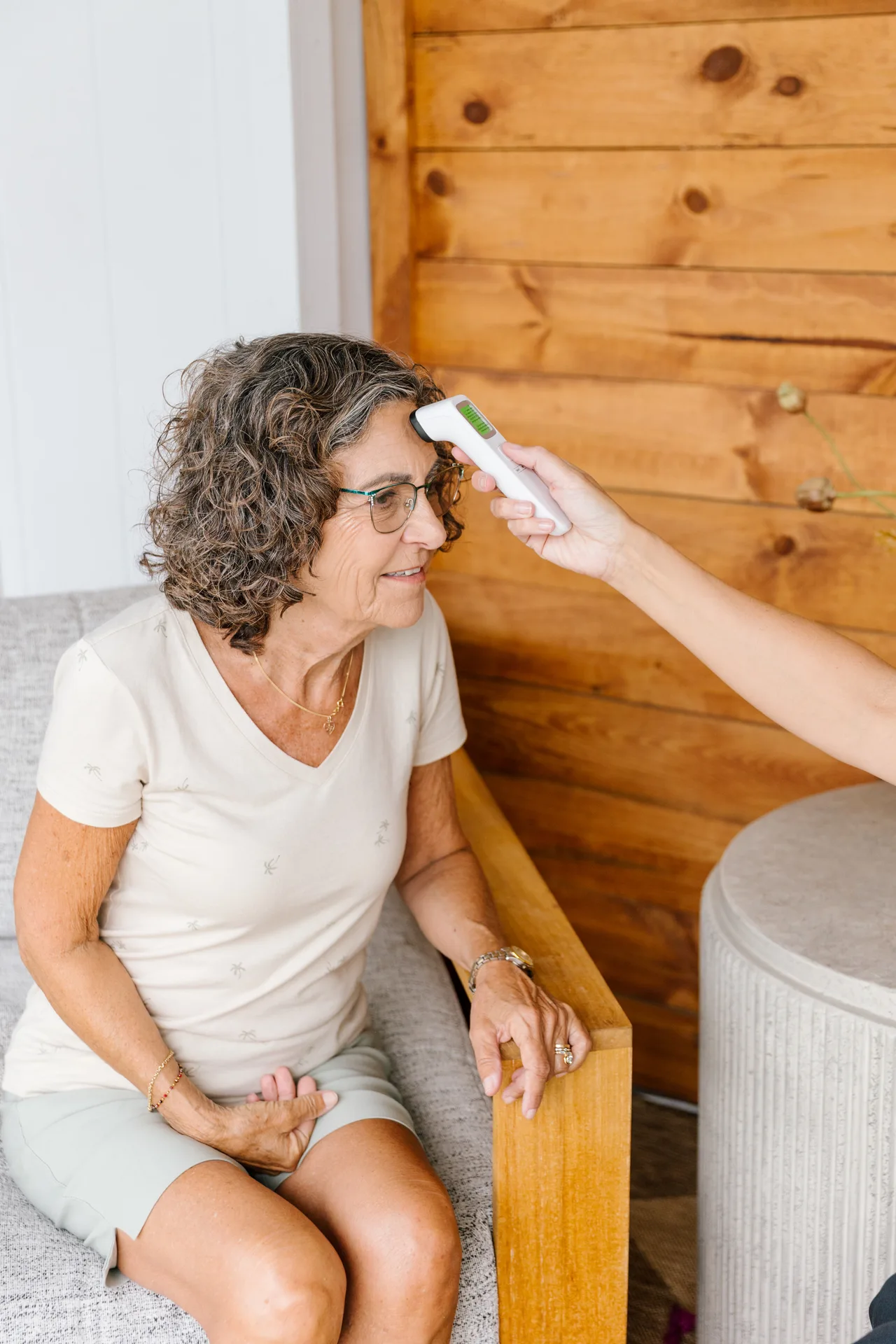
A patient whose blood pressure trends down or whose heart rate climbs needs eyes on them within hours, not at the next scheduled visit. Ask what triggers an unscheduled visit or a call to the surgeon, and how the team monitors for early signs of infection, blood clots, or fluid imbalance between visits.
What Does Communication With the Surgical Team Look Like?
The best post-op home nursing partner treats the surgeon as an active member of the care team, not a name on a discharge form. Ask whether updates are proactive, structured, and specific, or whether you will only hear from them if something goes wrong.
How Is Mobility and Activity Progression Supervised?
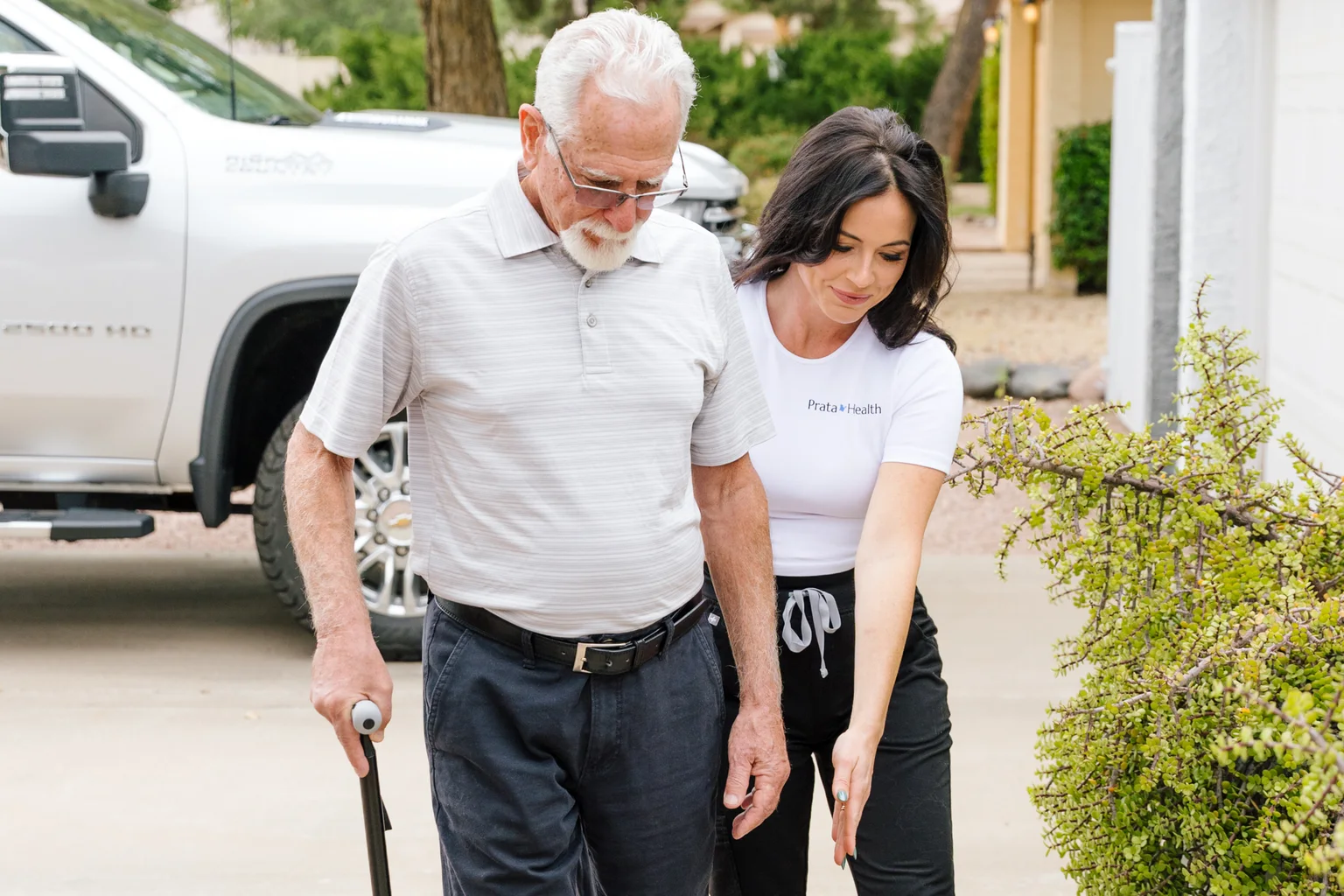
Staying active after surgery reduces the risk of blood clots, pneumonia, and deconditioning, but progressing too fast increases the risk of a fall or a wound complication. A skilled nurse partners with the physical therapist and builds a mobility progression specific to the procedure and adjusts it in real time, rather than following a generic printed handout.
How Are Family Members Supported Through Recovery?
Family members are usually the ones managing day-to-day questions between visits and often become the patient's primary caregiver overnight. A caring, RN-led partner trains family caregivers on wound checks, medication timing, and warning signs, and stays available so no caregiver is left guessing whether a symptom warrants a call.
What Makes an RN-Led Concierge Model Different From Standard Home Health
Many surgeons default to whichever home health agency has an opening, without asking whether that agency delivers true home care or just staffing coverage. There is a meaningful difference between home health dispatched from a call center roster at a home care company and Skilled Nursing Care led by a Registered Nurse who met the patient before discharge. It is also different from a care home or facility-based step-down unit, where the patient leaves the environment they know entirely.
At Prata Health, the goal is to get the patient home again, surrounded by family members, in a hybrid approach that pairs hands-on nursing care with the health navigation that keeps every specialist, prescription, and follow-up appointment coordinated under one accountable RN. That professional brings deep clinical experience to concierge care services, staying close to the case from discharge through full recovery, available for the specific needs of that patient rather than a generic protocol.
Red Flags That Predict a Return to the OR
Certain patterns show up again and again in patients who bounce back to the hospital after surgery: dressing changes that go undocumented, pain that is managed reactively instead of proactively, and no single clinician who can answer a question about the full care plan without transferring the call. The CDC identifies surgical site infections as among the most common and most preventable causes of post-surgical hospital readmission, and most preventable cases trace back to gaps in monitoring after discharge, not gaps in the surgery itself.
If a home nursing partner cannot describe their escalation protocol in specific terms, that is a sign the model is built around scheduled visits rather than active clinical judgment.
Start the Conversation Before Your Next Discharge
A surgeon's guide to choosing a post-op home nursing partner is only useful if it changes what happens before discharge. Request a Consultation to talk through how an RN-led care plan can support your next patient's recovery.