But the math is only part of the picture. The clinical quality of who provides and directs that care, and the degree of family control that comes with each model, are the factors that often tip the decision. This article walks through the cost mechanics, the coverage gaps families miss, and how RN-led in-home care changes the value equation in ways a spreadsheet cannot fully capture.
The Hours-Per-Week Crossover: How the Numbers Actually Work
Memory care communities in the greater Scottsdale and Paradise Valley area charge a flat monthly rate regardless of how much or how little direct attention a resident receives on any given day. In-home care, by contrast, scales precisely with need: families pay per hour for the exact support provided, nothing more.
According to A Place for Mom's 2024 long-term care cost data, the national median for memory care facility costs runs roughly $6,000 to $7,000 per month. In affluent metro Phoenix markets, families commonly report quotes ranging from $8,000 to $10,000 monthly for secured memory care units. The Genworth Cost of Care Survey, which provides the most widely cited annual benchmarks for long-term care costs, consistently places assisted living (the closest tracked category) at a median near $5,500 per month nationally, with Arizona markets running above that figure.
Meanwhile, professional in-home care billed at an hourly rate can remain well below those thresholds when care needs do not yet require round-the-clock supervision. If in-home caregivers are billing at the Arizona market range for non-medical home aides, 80 hours per week can total $10,000 or more monthly depending on local rates. At that volume, residential memory care often becomes the more economical choice. Below 80 hours per week, in-home care typically comes out ahead, sometimes by a meaningful margin.
The key question for any family is not which option is cheaper in the abstract. It is: how many hours per week does our loved one actually need right now, and where is that number likely to be in 12 to 18 months?
What Memory Care Monthly Fees Do and Do Not Cover
Before comparing care costs, families need to understand what a memory care facility's monthly fee actually includes. Most secured units bundle room, meals, housekeeping, activity programming, and 24-hour staff presence into a single monthly charge. That bundling creates the impression of comprehensive support.
What the bundle does not always include: physician visits, medication management at a clinical level, wound care, physical therapy, or one-on-one time with a registered nurse. These services frequently appear as line-item add-ons, and they can raise the effective monthly cost significantly above the base rate quoted during a facility tour.
Families who compare a facility's base quote to an in-home care estimate are often not comparing equivalent scopes of service. A thorough cost comparison must account for what clinical care needs exist and whether those needs are met within the flat fee or billed separately. The Consumer Financial Protection Bureau and the National Institute on Aging both advise families to request a detailed fee schedule before signing any memory care contract, precisely because base rates routinely understate true monthly costs.
Key Factors That Shift the Cost Crossover Point
The 80-to-100-hour crossover is a starting point, not a fixed rule. Each of the following factors can move the breakeven point meaningfully in either direction for a given family.
Overnight shift structure
Overnight caregiver shifts billed at a lower rate reduce the effective per-hour average for the full week, lowering total monthly cost considerably
Family caregiver hours
When family members absorb weekend mornings or evening routines, the total paid professional hours drop, which pushes the crossover point higher
Add-on fees at the facility
Medication management, incontinence supplies, and one-on-one behavioral support billed separately raise the true cost of memory care above its advertised base rate
Clinical complexity at home
Wound care, tube feeding, or complex medication regimens require licensed nursing hours, not just aide hours, which affects in-home cost calculations
Geographic rate variation
Arizona in-home care rates vary by region; Paradise Valley and north Scottsdale markets tend to run above state medians for credentialed home health staff
Insurance and long-term care policy
Existing long-term care insurance may cover in-home hours, facility costs, or both, and the policy terms directly affect out-of-pocket math
Calculating the True Cost of Around-the-Clock In-Home Care
When a loved one requires around-the-clock supervision, in-home care does require more hours and therefore more spending. Still, many families underestimate how rarely 24/7 truly means 168 hours of paid professional care per week.
Many families structure overnight care as a sleepover shift, where a caregiver stays on-site but is not actively engaged for most of the night. These shifts are typically billed at a lower overnight rate, which changes the per-hour average for the full week and brings the monthly total down considerably.
Additionally, family caregivers often absorb meaningful hours, particularly on weekends or mornings, which reduces the total paid hours even in high-needs situations. A care plan designed by a registered nurse can map the exact hours of professional support needed and identify where family involvement or lower-cost supervision is clinically appropriate.
Our Skilled Nursing Care team specializes in designing layered care plans that achieve clinical outcomes while helping families manage their care costs responsibly. An RN-led care model also catches complications early, which reduces emergency room visits and hospitalizations, often the largest and most unpredictable cost in any long-term care scenario. The National Institute on Aging notes that unplanned hospitalizations in older adults carry average costs well above the monthly cost of most care settings, making prevention-focused nursing a sound financial investment as well as a clinical one.
When a Loved One's Needs Change the Equation
Not every family is making a static decision. Progressive cognitive decline changes care needs over time. A parent who requires 40 hours of weekly support today may need 120 hours in 18 months. Understanding that trajectory matters as much as understanding today's care cost.
Research published by the Alzheimer's Association in its annual Facts and Figures report consistently documents that the total financial burden of Alzheimer's disease and related conditions falls substantially on patients and families, including both direct care costs and the value of unpaid family caregiving hours. Families supporting a loved one at home often shoulder meaningful out-of-pocket and informal care costs that are invisible in a simple fee comparison. That is precisely why planning for the trajectory of care, rather than only for current needs, matters: it helps families budget realistically and avoid the disruption of a crisis move into a facility when a parent's condition changes faster than expected.
A registered nurse conducting a comprehensive care needs assessment can evaluate not only today's support requirements but also the likely trajectory of cognitive and functional change. That clinical picture informs whether in-home care can realistically scale to meet future needs or whether residential memory care is the more prudent long-term plan.
For families navigating this uncertainty, concierge nursing in Paradise Valley offers a structured assessment process that produces a written care plan and a clear hours projection, giving families a financial roadmap alongside the clinical one.
Why RN-Led In-Home Care Changes the Value Equation
The cost comparison between in-home care and memory care often focuses exclusively on dollars per month. What that framing misses is the clinical value embedded in who is providing and directing the care.
In a traditional memory care facility, a resident's primary daily contact is with certified nursing assistants rather than licensed nurses. RN oversight exists but is typically shared across many residents, and the ratio of nurse-to-resident time is low by design. Staffing ratios in residential care facilities are set by state regulation and rarely approach the one-to-one attention an in-home caregiver provides.
In-home care, particularly RN-led concierge nursing, inverts that model. The registered nurse is directly involved in assessment, care plan creation, family communication, medication oversight, and coordination with physicians. For patients managing complex chronic conditions alongside cognitive decline, that clinical presence can prevent the kind of deterioration that makes residential placement feel inevitable.
The value of keeping a loved one at home extends well beyond the financial. AARP's 2024 Home and Community Preferences Survey found that more than three-quarters of adults aged 50 and older want to remain in their own home as they age. For those with cognitive decline, familiar surroundings, predictable routines, and consistent caregivers help reduce agitation and other behavioral changes, a principle reflected in current clinical guidance from the Alzheimer's Association, which recommends person-centered, environment-based approaches as first-line management before pharmacological intervention.
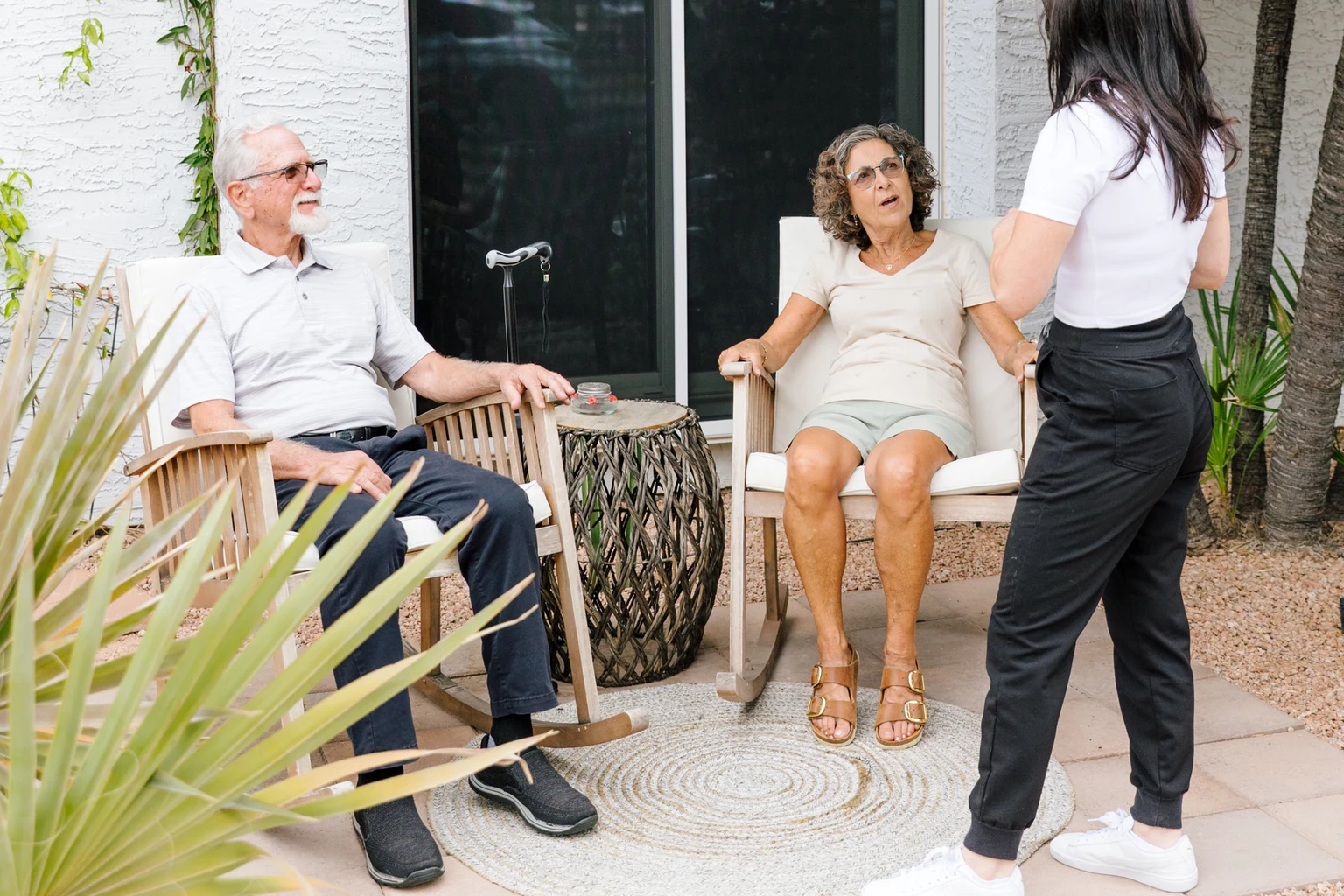
In-home care also preserves family autonomy. Families who choose memory care often describe feeling removed from daily decisions about their loved one's routine, meals, and activities. With RN-directed in-home care, the family and nurse set the care plan together, and adjustments happen in real time based on how the patient is actually doing that week.