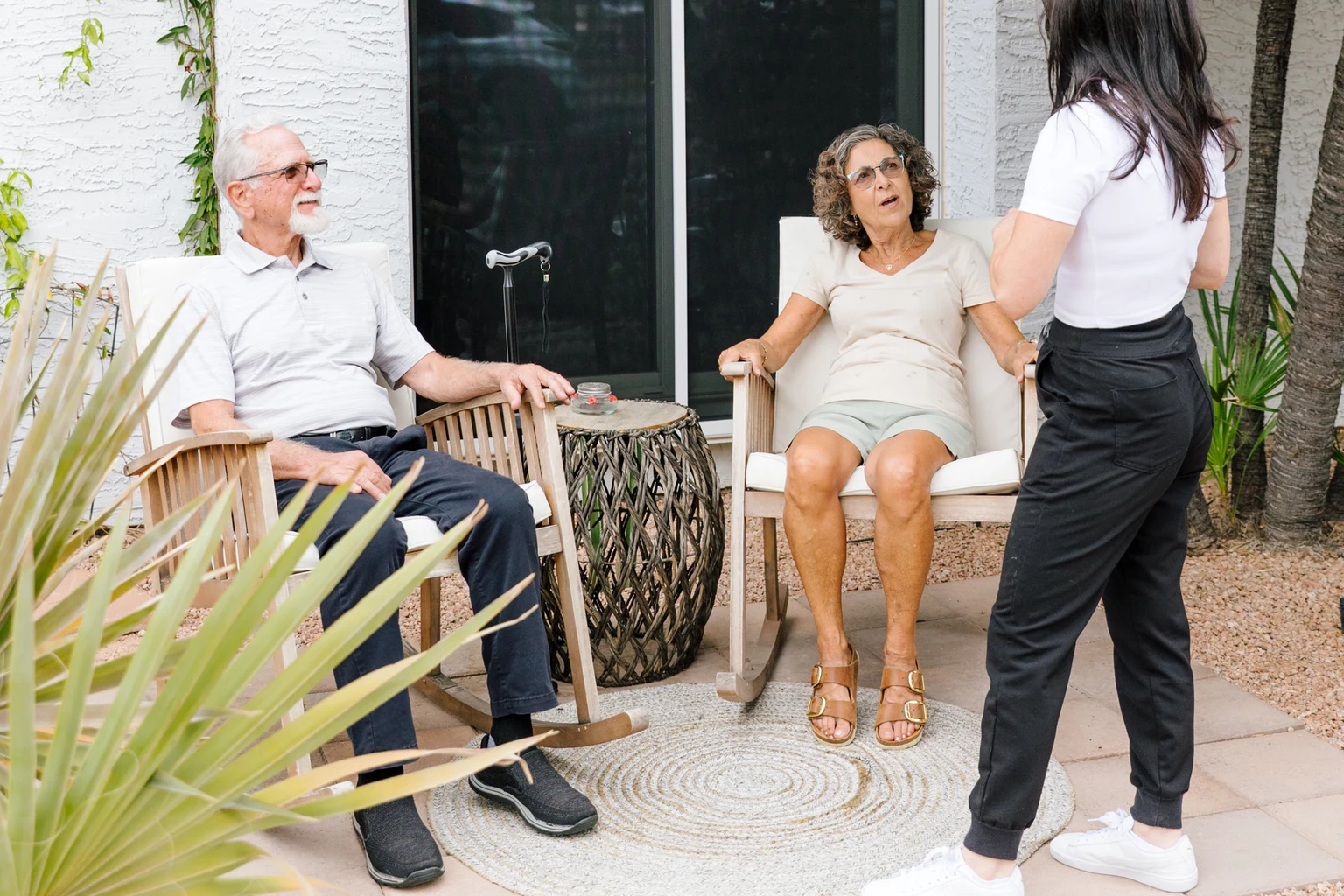
This guide is built around clinical markers, not guesswork. When multiple signs appear at once, that is the moment to reassess, not wait for a hospitalization to force the conversation. Aging in place nursing provides the consistent, clinically guided presence your family needs to keep your loved one safe at home.
Why a Once-a-Week Caregiver Is No Longer Enough
A weekly caregiver can be a meaningful support for older adults who are mostly independent. But aging does not follow a schedule. A parent who seemed steady during Sunday's visit may struggle with basic self-care by Wednesday. Research from the National Institute on Aging consistently shows that functional decline in older adults often occurs in episodes, periods when an individual cuts back on usual activities that can accelerate loss of the ability to perform daily tasks. These episodes can come and go between weekly visits, which a single check-in is not designed to catch.
The nine signs described here are best understood as a cumulative pattern of risk. When they appear in combination, early clinical intervention consistently produces better outcomes than reactive crisis management.
Signs 1 Through 3: Physical Safety and Daily Living
The first cluster of signs centers on what your parent can safely do on their own and what physical risks are accumulating in the gaps between visits.
Sign 1, Difficulty with activities of daily living: Activities of daily living, commonly referred to as ADLs, include bathing, dressing, toileting, transferring from bed or chair, continence, and feeding. When an aging parent needs help with two or more of these on a regular basis, a once-a-week caregiver cannot cover those gaps reliably or safely. Watch for unwashed hair, mismatched or soiled clothing, and declining personal hygiene that persists between visits.
Sign 2, Unexplained weight loss
Weight loss exceeding 5 percent of body weight over six months is a clinically significant finding. The National Institute on Aging identifies unintentional weight loss in older adults as a signal of increased health risk, often reflecting missed meals, difficulty preparing food, depression, or an undiagnosed medical condition. A family member who notices a consistently empty refrigerator or shrinking meal portions at each visit should treat this as a clinical alert, not a passing phase.
Sign 3, Falls or near-falls
A single fall in a person over 65 significantly increases the risk of a subsequent fall, according to data from the Centers for Disease Control and Prevention. If your loved one has fallen in the past six months, or if they describe near-falls such as grabbing furniture to stay upright, the current level of care is not sufficient. Falls can reflect medication side effects, dehydration, or early neurological changes, all of which require more frequent professional evaluation than a weekly schedule allows.
Signs 4 Through 6: Cognitive and Behavioral Red Flags
The second cluster addresses changes in thinking, memory, and behavior. These signs are often dismissed as normal aging. They are not.
Sign 4, Confusion or disorientation in familiar settings: Getting lost on a familiar street, forgetting recent conversations, or confusing family members by name are not normal parts of aging. These signs can point to mild cognitive impairment or early-stage cognitive decline. A once-a-week caregiver cannot build the behavioral baseline needed to detect subtle cognitive changes before they escalate into safety risks. The Alzheimer's Association and National Institute on Aging both identify consistent observation over time as essential for catching early cognitive changes.
Sign 5, Medication mismanagement
Older adults are disproportionately affected by polypharmacy, meaning the concurrent use of five or more medications. When a parent misses doses, doubles them up, or cannot recall what they have already taken, the consequences can be medically serious. This sign alone warrants at minimum daily medication oversight, which a once-a-week caregiver cannot provide. Health navigation connects families to a registered nurse who coordinates medication management alongside the treating physician.
Sign 6, Social withdrawal and mood changes
Isolation functions as both a symptom and a driver of decline. When an aging parent who once attended regular social activities stops going, refuses phone calls, or loses interest in hobbies kept for decades, that behavioral shift points to a mental health change that needs help well beyond weekly companionship. Depression in older adults frequently presents as withdrawal rather than overt sadness, and it is often missed by family members who are not seeing the parent consistently.
Signs 7 Through 9: Medical and Social Decline
The third cluster of signs covers chronic disease management, home environment, and the complex behavioral pattern that makes late-stage care conversations especially difficult.
Sign 7, Worsening chronic conditions
Conditions such as diabetes, heart failure, and COPD require consistent clinical monitoring. Blood glucose checks, fluid balance assessments, and oxygen saturation readings are not optional for these patients. When a family member's chronic condition is visibly deteriorating between physician appointments, a once-a-week caregiver leaves six days for the problem to compound without any clinical intervention.
Sign 8, Unsafe home conditions
During each visit, look at the home honestly. Expired food in the refrigerator, unpaid bills accumulated over weeks, unwashed dishes sitting for multiple days, or clutter that creates clear tripping hazards are environmental signs of cognitive or functional decline. These conditions do not correct themselves between weekly visits. They reflect a person who needs help managing the basics of daily living and can no longer keep up independently.
Sign 9, Resistance to care combined with unsafe behavior: The most complicated sign is also one of the most common among aging parents: a parent who needs help but refuses it, while continuing to decline visibly. This combination of poor insight and behavioral resistance appears frequently in early to moderate cognitive decline. It also signals that care decisions may need to involve a geriatric specialist, because family members alone are often not able to break through the resistance constructively.
Warning Signs at a Glance
These are the nine clinical markers we track when evaluating whether a current care plan is still appropriate. None of them should be dismissed as inevitable parts of aging.
ADL limitations
Needs help with two or more daily activities such as bathing, dressing, or transferring
Unexplained weight loss
Lost more than 5 percent of body weight in the past six months without a clear reason
Falls or near-falls
Has fallen in the past six months or describes grabbing furniture to stay upright
Cognitive disorientation
Gets lost in familiar settings, forgets recent conversations, or confuses family members
Medication mismanagement
Misses doses, double-doses, or cannot track a multi-drug regimen
Social withdrawal
Has stopped attending activities or lost interest in hobbies kept for years
Worsening chronic illness
Diabetes, heart failure, or COPD is visibly deteriorating between appointments
Unsafe home environment
Expired food, accumulated clutter, or unpaid bills reflect declining function
Care resistance with decline
Refuses help while visibly losing the ability to manage safely alone
When More Care Does Not Mean a Facility
Many families assume that when an aging parent has outgrown a once-a-week caregiver, the only path forward is assisted living. That assumption is worth questioning carefully. For many older adults, the right answer is more frequent skilled nursing in the home where they already live.
Assisted living is the appropriate choice for some clinical situations. But for others, increasing the frequency and depth of in-home nursing allows the parent to remain in a familiar, comfortable environment while receiving the skilled oversight they need. A registered nurse can manage medications, monitor chronic conditions, coordinate with physicians, and document clinical changes over time.
Family members who recognize several signs from this list should not wait for a fall or a hospitalization to force the issue. The nine signs described here are best understood as a cumulative pattern of risk, and early clinical intervention consistently produces better outcomes than reactive crisis management.