By Bianca Fabbo, MSN-ed, RN, AMB-BC
What a Certified Nursing Assistant Actually Does in the Home
A certified nursing assistant completes a state-approved nurse assistant training program, passes both a written knowledge exam and a hands-on clinical skills evaluation, and holds a state certification before providing care. The classroom component covers infection control, patient communication, basic anatomy, and documentation. The clinical hours require supervised practice in a real healthcare setting.
CNA programs are offered through community colleges, vocational schools, and hospital-based training centers across Arizona and California. In Arizona, the required training program mandates a minimum of 120 combined hours under Arizona Administrative Code R4-19-802, the rule administered by the Arizona State Board of Nursing, which exceeds the federal OBRA minimum of 75 hours set in 42 CFR 483. In California, nurse assistant training requires at least 160 hours (60 classroom and 100 supervised clinical) under the California Department of Public Health and California Code of Regulations Title 22, before a candidate may sit for the certification exam. Graduates must pass a two-part test, a written portion and a skills demonstration, to earn the certified nursing assistant designation.
The CNA activity assistant at Prata Health focuses on personal care and engagement tasks within this certification scope: morning routines, personal hygiene, meal assistance, light mobility support, and structured daily activities that promote cognitive and social wellbeing. These are skills the aide has specifically trained to deliver. What falls outside that scope is clinical decision-making, such as assessing wound changes, interpreting vital sign trends, or triaging a new symptom. That boundary is not a limitation. It is a structural safeguard the CNA activity assistant model is designed to honor.
The RN's Role: Clinical Authority Behind Every Care Day
The registered nurse in this model is not a distant coordinator who signs paperwork. At Prata Health, Bianca Fabbo, RN, and the clinical team establish each client's care plan, communicate directly with the treating physician, and remain reachable around the clock, seven days a week.
The RN conducts regular in-person assessments and reviews the CNA activity assistant's daily observations, watching for patterns that signal clinical change: a shift in appetite, a change in sleep quality, a new reluctance to move a limb. These observations are clinically actionable only because a licensed nurse is on the other end of every daily report.
Research from the National Institute on Aging and the Agency for Healthcare Research and Quality consistently finds that structured, nurse-led care coordination in home settings reduces avoidable hospitalizations and supports better outcomes for older adults managing chronic illness or cognitive decline. Engagement and behavioral strategies work best when a licensed clinician guides how they are applied and monitors the results over time. That oversight layer is not administrative overhead. It is grounded in evidence-based practice.
This structure also means that when a family member calls with a concern, the response comes from a nurse who holds the complete clinical picture, not a staffing coordinator with no medical training.
Why the Two-Role Structure Reduces Risk
The most common risks in home-based elder care are not dramatic emergencies. They are subtle, cumulative changes: a pressure area developing beneath clothing, a medication interaction presenting as unusual fatigue, a gradual cognitive shift that goes unnamed because no one is tracking it with clinical intent.
A trained nursing assistant is positioned to notice these early signals because she is present daily. But noticing and interpreting are two different functions. The CNA activity assistant who observes that a client "seems off today" may not know whether that observation warrants a blood pressure check or an urgent physician call. The RN who receives that report does know.
When these roles are separated and the aide reports only to a family member without medical training, clinical signals routinely get lost. The CNA activity assistant model closes that gap by routing every observation to a licensed nurse who holds clinical authority over the care plan. That accountability loop is what makes this structure fundamentally different from a standard aide placement.
CNA Training Requirements and What Families Should Know
Knowing what your aide's certification actually required helps you evaluate qualifications honestly. CNA programs cover a defined set of nursing assistant skills across both classroom and supervised clinical training.
Infection control
hand hygiene, PPE use, isolation precautions taught in classroom and practiced clinically
Safe patient transfer
mechanical lift operation, gait belt technique, two-person transfer protocols
Vital sign measurement
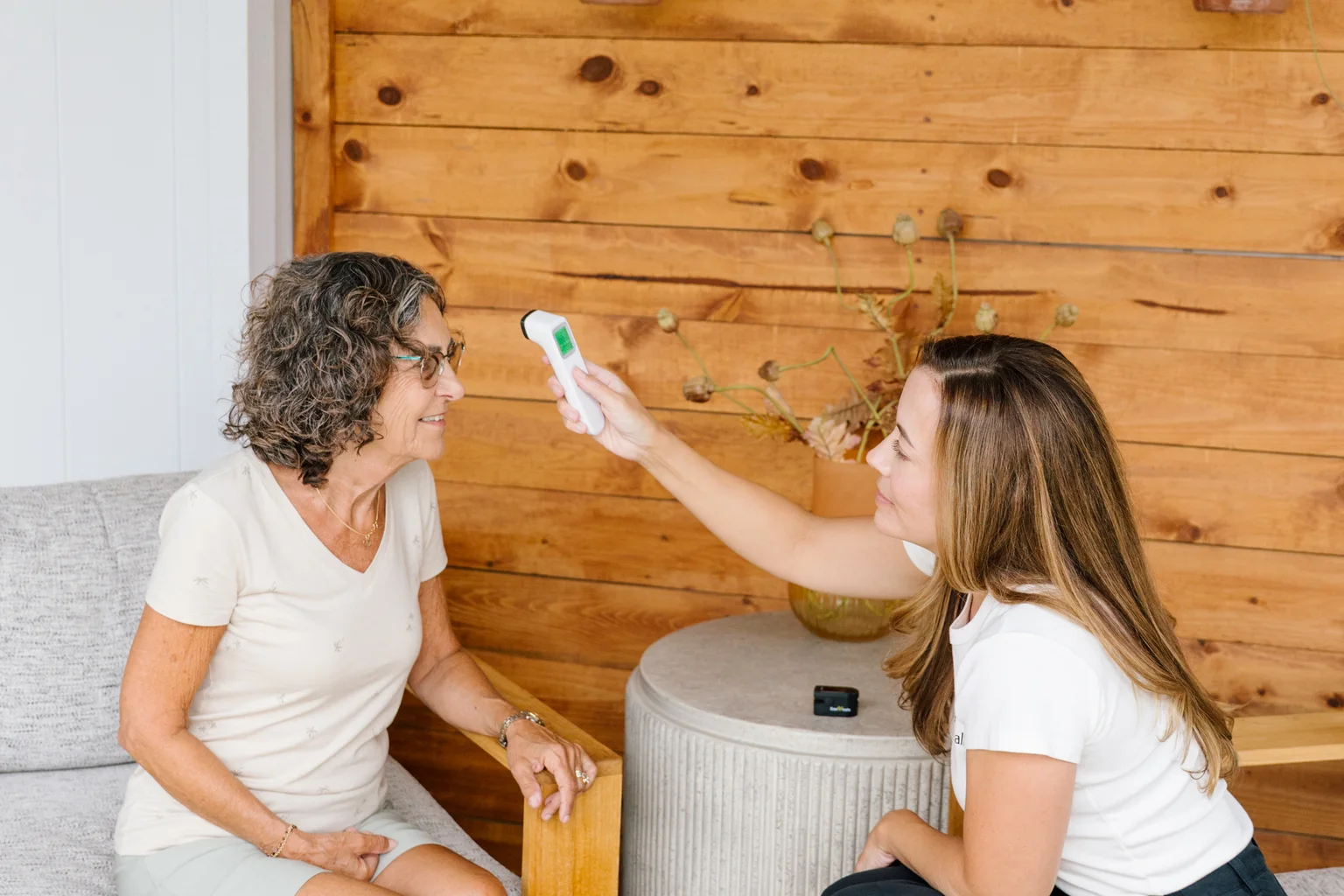
blood pressure, pulse, respiration, temperature, oxygen saturation in supervised settings
Client communication
therapeutic listening, family interaction, and respectful personal care delivery
Documentation basics
accurate observation recording and incident reporting within regulatory standards
Basic first aid response
choking, bleeding control, fall response protocols included in all approved programs
Continuing education
both Arizona and California require ongoing education to maintain certification currency
How Credential Verification Protects Your Family
Arizona regulates CNA programs through the Arizona State Board of Nursing under Arizona Administrative Code R4-19-802. California programs are governed by the California Department of Public Health. Both states require continuing education to maintain certification. A certificate issued years ago without renewal may no longer be current, which is why credential verification matters before any placement.
At Prata Health, we verify every aide's certification status and continuing education record before placement. A lapsed credential in a private aide arrangement often goes undetected because no supervising clinician is checking. The CNA activity assistant model makes credential integrity a clinical responsibility, not an afterthought.
How Each Day Flows in the CNA Activity Assistant Model
A typical care day follows a structured rhythm that connects personal support directly to clinical oversight at every step.
Morning routines begin the day
the CNA activity assistant supports the client through grooming, dressing, and breakfast, then opens with a structured activity calibrated to the care plan, typically spanning 30 to 45 minutes of genuine engagement without exhausting a client with limited stamina.
Midday activities follow the care plan and may include gentle exercise, a cognitive engagement task, social connection, or a community outing, all within the aide's trained scope and the nurse's established parameters.
Medication prompting occurs in the afternoon: the aide reminds the client to take medications a licensed nurse has already dispensed and organized, reducing missed doses without crossing into clinical scope.
End-of-day documentation closes the loop
the CNA activity assistant records her observations and submits them to the supervising RN, who reviews the notes and determines whether any care plan adjustment or physician contact is warranted.
Every step feeds a clinical record the nurse uses to assess trajectory over time, not just the events of a single day, which is the essential difference between daily assistance and a medically accountable care team.